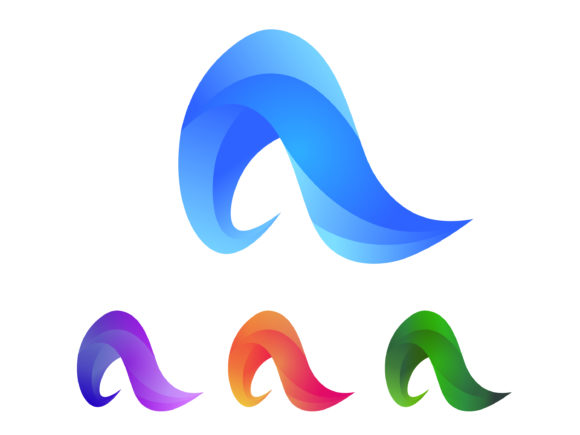
Modern A Letter Logo Design: 4 Color Variations for Your Brand
When you think about the building blocks of a strong brand identity, the logo is often the cornerstone. It’s the first thing people see, the symbol they remember, and the visual shorthand for everything your business or project represents. If you're in the process of creating or refreshing a brand, finding a logo that feels both professional and versatile can be a challenge. That's where a well-crafted asset like the A Letter Logo Design with 4 Color Variations comes into play. This isn't just a simple graphic; it's a complete, scalable toolkit designed to give your brand a polished and contemporary look right from the start.
Understanding the Visual Appeal and Personality
This particular logo design centers on the letter "A," rendered in a colorful, modern style. The "A" is likely designed with clean lines, balanced proportions, and a sense of dynamic energy, making it feel both approachable and authoritative. The inclusion of four distinct color variations is a critical feature. Each variation—perhaps one in a deep navy and coral, another in a vibrant teal and gold, a third in a soft lavender and slate, and a fourth in a bold red and charcoal—offers a different mood and personality. This allows the logo to adapt seamlessly to various contexts without losing its core identity. The overall appeal lies in its flexibility. It’s a design that can feel corporate and trustworthy one moment, and creative and energetic the next, simply by switching the color palette. The vector-based nature of the files (EPS, SVG) means every curve and line remains crisp and clear, whether it's scaled for a tiny favicon or a large-format banner.
Where This Logo Design Truly Shines
The real-world applications for such a versatile logo asset are extensive. For entrepreneurs and small business owners, it provides an immediate, professional foundation for a brand identity. Use the primary color variation on your business cards, website header, and email signature to establish instant recognition. The alternate color schemes are perfect for seasonal marketing campaigns, product line extensions, or social media graphics that need a fresh look while maintaining brand consistency.
In the realm of editorial design and publishing, a logo like this can be adapted for different sections of a magazine, blog, or newsletter. The "A" could stand for the publication's name or a key section like "Analysis" or "Art." Using different color variations for different topics or departments creates a cohesive yet visually interesting system for readers.
For marketers and content creators, the high-resolution JPG and transparent PNG files are invaluable. They integrate flawlessly into web design, social media graphics, and digital ads. Imagine creating a series of Instagram posts or YouTube thumbnails where the logo color scheme subtly changes to match the topic or mood of the content—this kind of detail elevates the perceived quality and professionalism of your work. Even for personal projects, like a crafting blog or a hobbyist's portfolio, this logo design adds a layer of polish that helps you stand out.
Making the Most of Your Logo Asset
Integrating this logo design effectively into your projects requires a bit of strategic thinking. First, choose your primary color variation based on your core brand values. Is your brand more about trust and stability (blues, greens) or innovation and energy (reds, oranges, bright accents)? Establish this as your main identity. Then, use the other three variations intentionally. They are not replacements but complementary tools. Perhaps use a secondary variation for internal documents or a tertiary one for a specific, limited-time promotion.
When it comes to font pairing—since this is a logo, not a typeface for body text—think about the supporting text on your website or materials. A logo with a modern, geometric "A" might pair well with a clean sans serif font for headlines and a highly readable serif or sans serif for body copy. The key is to let the logo be the visual star while the typography supports it without competing. Test how the logo looks against different backgrounds and alongside your chosen fonts to ensure the visual hierarchy is clear.
Always consider the technical aspects. The provided artboard size (2800px by 2100px) is generous, giving you ample room for high-resolution printing. The vector formats (EPS, SVG) are your master files for any scaling needs. Use the PNG file for digital applications where you need the logo to sit over images or colored backgrounds without a white box. By understanding the strengths of each file format and color option, you move from simply having a logo to strategically using a design asset that enhances brand perception, ensures consistency across all touchpoints, and ultimately fosters stronger audience engagement. It’s about making a deliberate, informed choice that serves your project’s goals and resonates with your intended audience.