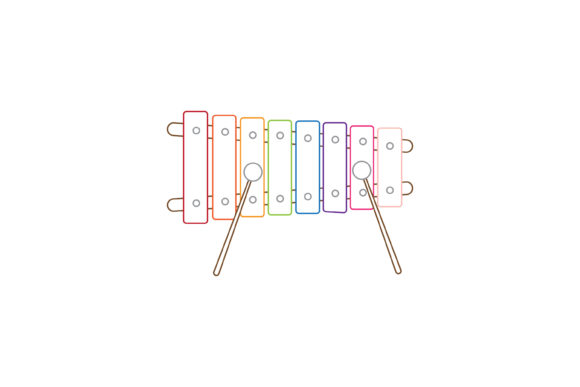
Music Instrument Xylophone Color Line: A Designer's Playful Asset
When you encounter the Music Instrument Xylophone Color Line, you immediately feel its rhythm. This isn't just a static collection of letters; it's a design asset that carries the joyful, percussive energy of a xylophone directly into your visual projects. For designers, entrepreneurs, and content creators, this vector graphic offers a unique blend of whimsy and professionalism, making it a standout tool for branding and illustration that needs to feel approachable, creative, and vibrant.
Visual Character and Stylistic Appeal
At its core, the Music Instrument Xylophone Color Line is a line-based illustration style. Its defining feature is the use of clean, confident outlines to define the shape of the xylophone, often accompanied by colorful, playful bars that mimic the instrument's keys. The "color line" aspect means it's designed with layered elements, allowing you to easily manipulate individual parts—the frame, the bars, the mallets—in a vector program like Adobe Illustrator. This gives you immense creative control. The overall personality is friendly, modern, and slightly retro, evoking a sense of fun, education, and creativity. It avoids being overly childish, striking a balance that works for both kid-focused brands and adult-oriented creative services.
The style leans into a modern graphic design aesthetic. It uses flat colors with subtle depth provided by the line work, making it feel contemporary and clean. This approach ensures it integrates seamlessly into current design trends while retaining a timeless, iconic quality. The visual hierarchy is clear: the xylophone shape is instantly recognizable, and the color lines guide the viewer's eye, creating a natural focal point that is both engaging and easy to understand.
Practical Applications Across Creative Fields
The true value of the Music Instrument Xylophone Color Line is in its versatility. As a vector file, it's a foundational design asset for numerous projects. For logo design, it can be the central mark for music schools, educational apps, creative studios, or children's activity brands. Its inherent friendliness builds immediate trust and recognition.
In editorial design and publishing, it shines as a spot illustration for blog posts about music education, creativity, or childhood development. It can break up text-heavy layouts in magazines or newsletters, adding a burst of color and visual interest. For packaging design, think of the appeal for artisanal toy brands, musical instrument accessories, or even craft brewery labels looking for a playful, retro touch.
Digital creators will find it invaluable for social media graphics and web design. Use it as a featured image for an article, a highlight cover icon, or an animated element in a video intro. The included formats ensure it looks crisp on any screen. For t-shirt designs and merchandise, the graphic's bold lines and scalable colors translate perfectly to apparel, tote bags, and posters, appealing to musicians, educators, and hobbyists alike.
Integrating the Asset into Your Design Workflow
Choosing to use the Music Instrument Xylophone Color Line involves more than just liking how it looks. Consider your project's core message. Does it align with themes of music, creativity, learning, or play? If yes, you're on the right track. Evaluate the color palette provided. While customizable, the default colors set a specific mood—often bright and optimistic. Ensure this palette complements your existing brand colors or the overall tone of your design.
One of the biggest advantages of this vector asset is its editability. You aren't stuck with the default configuration. In Adobe Illustrator or Corel Draw, you can:
- Change Colors: Recolor the xylophone bars to match your brand identity precisely.
- Isolate Elements: Use just the outline of the xylophone for a more minimalist look, or extract a single mallet as a secondary icon.
- Adjust Stroke Weights: Fine-tune the line thickness to better fit with other typography or graphics in your layout.
- Scale Infinitely: Resize it for a tiny favicon or a giant trade show banner without any loss of quality, thanks to the .AI, .EPS, and .SVG vector formats.
For projects requiring raster images, the provided .PNG (with transparency) and .JPG (with white background) files are ready to use, saved at a high resolution suitable for both print and digital output. This dual-format approach saves significant time in production.
Design Observations and Final Recommendations
From a practical standpoint, this asset excels as a display font complement. Pair it with a clean, sans-serif typeface for body text to let the xylophone graphic command attention as a headline element. It can also work beautifully alongside a friendly, rounded sans serif font to reinforce a modern, approachable brand identity. Avoid pairing it with overly formal serif fonts or complex script fonts, which could clash with its playful personality.
When using it in brand identity work, consistency is key. Use the same version (same color scheme, same line weight) across all touchpoints—from your website header to your email signature—to build strong visual recognition. Its strength lies in being a memorable graphic mark rather than a traditional typeface, so use it strategically as an icon or illustration, not as a replacement for text.
Ultimately, the Music Instrument Xylophone Color Line is more than just a drawing of an instrument. It's a versatile creative font asset in the broader sense—a piece of modern typography and illustration that can inject personality, clarity, and joy into a wide array of commercial and personal projects. For the designer or business owner looking to communicate creativity and warmth, it's a practical, high-quality tool worth exploring.